Fun facts about countries
Surprising facts about the world's nations - capitals, continents, and the stories behind the borders.

The name Sudan derives from the Arabic bilād as-sūdān, meaning 'The Land of the Blacks'.
Sudan
Sudan, officially the Republic of the Sudan, is a country in Northeast Africa. It borders the Central African Republic to the southwest, Chad to the west, Libya to the northwest, Egypt to the north, the Red Sea to the east, Eritrea and Ethiopia to the southeast, and South Sudan to the south.
From the “Etymology” section
Text from Wikipedia, CC BY-SA 4.0.
Photo: walter callens · CC BY 2.0

The first recorded use of the word Danmark is found on the two Jelling stones, believed to have been erected by Gorm the Old and Harald Bluetooth.
Denmark
Denmark is a Nordic country in Northern Europe. It is the metropole and most populous constituent of the Kingdom of Denmark, also known as the Danish Realm, a constitutionally unitary state that includes the autonomous territories of the Faroe Islands and Greenland in the north Atlantic Ocean.
From the “Etymology” section
Text from Wikipedia, CC BY-SA 4.0.
Photo: National Museum of Denmark · CC BY-SA 3.0

The Indigenous peoples, the Ciboney, called the island Xaymaca, meaning the 'Land of Wood and Water'.
Jamaica
Jamaica is an island country in the Caribbean, covering 10,990 square kilometres (4,240 sq mi). It is the third-largest island in the Greater Antilles and the Caribbean, after Cuba and the island of Hispaniola.
From the “Etymology” section
Text from Wikipedia, CC BY-SA 4.0.
Photo: CaptJayRuffins · CC BY-SA 4.0

The name Paraguay may derive from the Guaraní words for 'feather crown of waters'.
Paraguay
Paraguay, officially the Republic of Paraguay, is a landlocked country located in the central region of South America. It borders Bolivia to the northwest and north, Brazil to the northeast and east, and Argentina to the southeast, south, and west.
From the “Etymology” section
Text from Wikipedia, CC BY-SA 4.0.
Photo: Alfredo L. Demersay · Public Domain
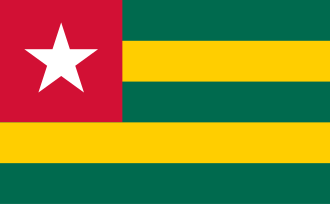
The name of Togo means 'by the water' or 'behind the sea', derived from the Ewe words for water and shore.
Togo
Togo, officially the Togolese Republic, is a country in West Africa. It is bordered by Ghana to the west, Benin to the east and Burkina Faso to the north. It is one of the least developed countries in the world. It extends north from the Gulf of Guinea to the Burkina Faso-Togo border.
From the “Etymology” section
Text from Wikipedia, CC BY-SA 4.0.
Photo: Rudolf Hellgrewe · Public Domain
![Manuscript illustration, c. 1650, of the Sanskrit epic Ramayana, composed in story-telling fashion c. 400 BCE – c. 300 CE[75]](https://upload.wikimedia.org/wikipedia/en/thumb/4/41/Flag_of_India.svg/330px-Flag_of_India.svg.png)
The term Bharat gained increased currency from the mid-19th century as a native name for India.
India
India, officially the Republic of India, is a country in South Asia. It is the seventh-largest country by area, the most populous country in the world and, since its independence in 1947, the world's most populous democracy.
From the “Etymology” section
Text from Wikipedia, CC BY-SA 4.0.
Photo: Sahibdin · Public Domain

Montenegro's name translates to 'Black Mountain' from the Montenegrin phrase 'Crna Gora'.
Montenegro
Montenegro is a country in Southeast Europe, on the Balkan Peninsula. Its 25 municipalities have a total population of 633,158 people in an area of 13,883 km2.
From the “Etymology” section
Text from Wikipedia, CC BY-SA 4.0.
Photo: ArdadN · Public Domain

The word Tunisia is derived from Tunis, which is the capital of modern-day Tunisia.
Tunisia
Tunisia, officially the Republic of Tunisia, is a country in the Maghreb region of North Africa. It is bordered by Algeria to the west and southwest, Libya to the southeast, and the Mediterranean Sea to the north and east.
From the “Etymology” section
Text from Wikipedia, CC BY-SA 4.0.
Photo: Javierfv1212 (talk) · Public Domain

The Panama tree, known scientifically as Sterculia apetala, is considered a national symbol of Panama.
Panama
Panama, officially the Republic of Panama, is a country located at the southern end of Central America in North America, bordering South America. It is bordered by Costa Rica to the west, Colombia to the southeast, the Caribbean Sea to the north, and the Pacific Ocean to the south.
From the “Etymology” section
Text from Wikipedia, CC BY-SA 4.0.
Photo: Yves Picq http://veton.picq.fr · CC BY-SA 3.0

The name Việt Nam means 'Viet of the South' in Vietnamese word order.
Vietnam
Vietnam, officially the Socialist Republic of Viet Nam (SRV), is a country at the eastern edge of Mainland Southeast Asia. With an area of about 331,000 square kilometres and a population of over 102 million, it is the world's 16th-most populous country.
From the “Etymology” section
Text from Wikipedia, CC BY-SA 4.0.
Photo: Lê Ngô Cát 黎吳吉, Phạm Đình Toái 范廷碎 · Public Domain

"Papua" is derived from a local term of uncertain origin that may have referred to part of the island now called New Guinea.
Papua New Guinea
Papua New Guinea (PNG), officially the Independent State of Papua New Guinea, is an island country in Oceania that comprises the eastern half of the island of New Guinea and offshore islands in Melanesia, a region of the southwestern Pacific Ocean north of Australia.
From the “Etymology and naming” section
Text from Wikipedia, CC BY-SA 4.0.
Photo: Hiart · CC0

The first Norseman to reach Iceland was Naddodd, who named it Snæland (Snowland).
Iceland
Iceland is a Nordic island country between the Arctic Ocean and the North Atlantic Ocean, located on the Mid-Atlantic Ridge between Europe and North America. It is culturally and politically linked with Europe and is the region's westernmost and most sparsely populated country.
From the “Etymology” section
Text from Wikipedia, CC BY-SA 4.0.
Photo: Oscar Wergeland · Public Domain

The name Malawi means 'flames' in Chichewa and Chitumbuka.
Malawi
Malawi, officially the Republic of Malawi, is a landlocked country in Southeast Africa. It is bordered by Zambia to the west, Tanzania to the north and northeast, and Mozambique to the east, south, and southwest. Malawi spans over 118,484 km2 (45,747 sq mi) and has a population of 22,224,282.
From the “Etymology” section
Text from Wikipedia, CC BY-SA 4.0.
Photo: Lazare Eloundou Assomo · CC BY-SA 3.0 igo

The name 'Guatemala' means 'place of many trees' in Nahuatl.
Guatemala
Guatemala, officially the Republic of Guatemala, is a country in northern Central America. It is bordered to the north and west by Mexico, to the northeast by Belize, to the east by Honduras, and to the southeast by El Salvador. It is bounded by the Pacific Ocean to the south and the Gulf of Honduras to the northeast.
From the “Etymology” section
Text from Wikipedia, CC BY-SA 4.0.
Photo: United Nations Department of Peacekeeping Operations Cartographic Section · Public Domain

The name Algeria ultimately derives from the city of Algiers, which means 'the islands' in Arabic.
Algeria
Algeria, officially the People's Democratic Republic of Algeria, is a country in the Maghreb region of North Africa. Spanning over 2,381,741 square kilometres (919,595 sq mi), it is the largest country in Africa and the tenth largest in the world.
From the “Name” section
Text from Wikipedia, CC BY-SA 4.0.
Photo: Georg Braun, Franz Hogenberg · Public Domain

The Pepper Coast, also known as the Grain Coast, has been inhabited by Niger-Congo peoples at least as far back as the 12th century.
Liberia
Liberia, officially the Republic of Liberia, is a country on the West African coast. It is bordered by Sierra Leone to its northwest, Guinea to its north, Ivory Coast to its east, and the Atlantic Ocean to its south and southwest.
From the “History” section
Text from Wikipedia, CC BY-SA 4.0.
Photo: Herman Moll · Public Domain

Costa Rica is one of the countries with the greatest biodiversity in all of Latin America.
Costa Rica
Costa Rica, officially the Republic of Costa Rica, is a country in Central America. It borders Nicaragua to the north, the Caribbean Sea to the northeast, Panama to the southeast, and the Pacific Ocean to the southwest, sharing a maritime border with Ecuador to the south of Cocos Island.
From the “Geography” section
Text from Wikipedia, CC BY-SA 4.0.
Photo: Rodtico21 · CC BY-SA 3.0

The name Australia is derived from the Latin Terra Australis Incognita, meaning 'unknown southern land'.
Australia
Australia, officially the Commonwealth of Australia, is a country comprising the mainland of the Australian continent, the island of Tasmania and numerous smaller islands.
From the “Etymology” section
Text from Wikipedia, CC BY-SA 4.0.
Photo: TimJN1 · CC BY-SA 2.0

New Caledonia was part of the continent Zealandia, which sank between 79 million and 83 million years ago.
New Caledonia
New Caledonia is a French territory consisting of a group of islands in the southwest Pacific Ocean, 220 km (140 mi) southwest of Vanuatu and 1,210 km (750 mi) east of Australia.
From the “History” section
Text from Wikipedia, CC BY-SA 4.0.
Photo: OpenStreetMap and contributors, Kelisi · CC BY-SA 4.0

The name Slovenia etymologically means 'land of the Slavs'.
Slovenia
Slovenia, officially the Republic of Slovenia, is a country in Central Europe. It borders Italy to the west, Austria to the north, Hungary to the northeast, and Croatia to the south and southeast; its southwestern boundary consists of a 46.6-kilometre (29.0 mi) coastline on the Adriatic Sea.
From the “Etymology” section
Text from Wikipedia, CC BY-SA 4.0.
Photo: Petar Milošević · CC BY-SA 4.0

Djibouti is named for its capital, the City of Djibouti.
Djibouti
Djibouti, officially the Republic of Djibouti, is a country in the Horn of Africa, bordered by Somalia to the south, Ethiopia to the southwest, Eritrea in the north, and the Red Sea and the Gulf of Aden to the east. The country has an area of 23,200 km2 (8,958 sq mi).
From the “Name and etymology” section
Text from Wikipedia, CC BY-SA 4.0.
Photo: Skilla1st · CC BY-SA 4.0

The name 'Myanmar' is derived from the earlier Burmese 'Mranma' or 'Mramma', an ethnonym for the majority Burman ethnic group.
Myanmar
Myanmar, officially the Republic of the Union of Myanmar and also referred to as Burma, is a country in northwest Southeast Asia. It is the largest country by area in Mainland Southeast Asia and has a population of about 55 million.
From the “Etymology” section
Text from Wikipedia, CC BY-SA 4.0.
Photo: Corto Maltese 1999 · CC BY 2.0

The name Bulgaria is derived from the Bulgars, a tribe of Turkic origin.
Bulgaria
Bulgaria, officially the Republic of Bulgaria, is a country in Southeast Europe. It is situated on the eastern portion of the Balkans directly south of the Danube river and west of the Black Sea.
From the “Etymology” section
Text from Wikipedia, CC BY-SA 4.0.
Photo: Ann Wuyts · Public Domain

The name Herzegovina means 'herzog's [land]', derived from the German word for 'duke'.
Bosnia and Herzegovina
Bosnia and Herzegovina, often referred to as Bosnia-Herzegovina or simply Bosnia, is a country in Southeast Europe.
From the “Etymology” section
Text from Wikipedia, CC BY-SA 4.0.
Photo: Wolfgang Sauber · CC BY-SA 4.0
You have seen 720 facts
Keep exploring - or dive deeper into a place page.
Switch topic